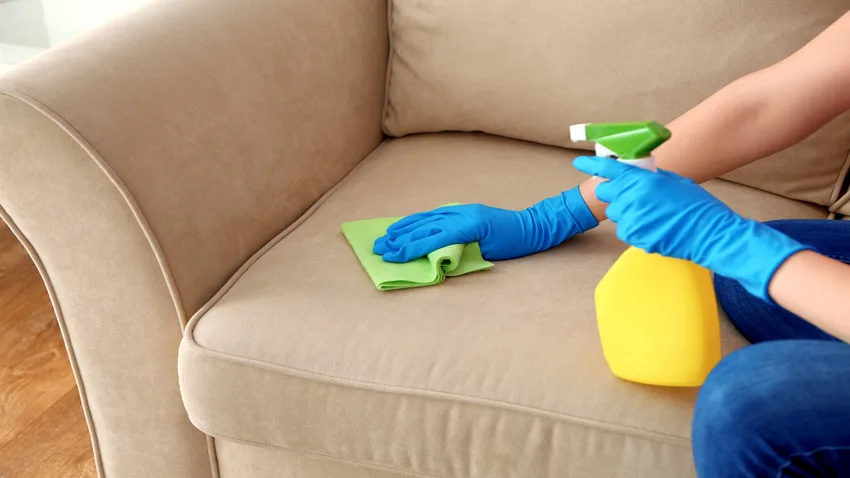

“To clean a microfiber couch, first check the care tag, vacuum the surface, then spot-clean with rubbing alcohol (for “S” couches) or a mild dish soap and water mix (for “W” couches). Always test in a hidden spot, work in small sections, and brush the fabric soft once it dries.”
That is the short version. The full guide by Yalla Upholstery below gives you 10 easy, proven ways to clean stains, kill odors, and bring the fabric back to life. Each method is simple enough for a beginner and works in under 2 hours.
Microfiber is one of the most popular couch fabrics in homes today. If you’re comparing materials, our guide to best upholstery fabrics can help you choose the right option for every furniture type. For example, sunbrella or olefin fabrics for lounger and chair upholstery. The problem is that microfiber traps oil, soaks up spills fast, and shows water rings if you clean it wrong. The good news is that you do not need pricey store products. Most of what you need is already in your kitchen or bathroom.
Let’s get your couch looking new again.
What Is Microfiber, and Why Does It Stain So Easily?
Microfiber is a synthetic fabric made from very thin strands of polyester and nylon. These strands are about 100 times thinner than a human hair, which is why the fabric feels soft like suede.
That tight, thin weave is also the catch. Microfiber repels water on the surface but pulls in oil, body grease, and food residue deep into the fibers. So the fabric is not stain-proof. It just hides dirt until it builds up.
Two things make microfiber tricky to clean:
- Water rings. Too much water leaves a dried ring or patch on the surface.
- Stiff, matted fibers. The nap can dry hard and flat after cleaning, which makes the couch look worn.
Both problems are easy to avoid once you know the right steps. That is what the rest of this guide covers.
Is Microfiber the Same as Microsuede?
Microsuede is a type of microfiber made to look and feel like real suede. So all microsuede is microfiber, but not all microfiber is microsuede.
The cleaning rules are nearly the same. Check the care code, test first, and avoid soaking the fabric. Microsuede shows water marks a little more, so go even lighter with liquid and brush the nap with care.
Read the Care Tag Before You Clean Anything

Every microfiber couch carries a cleaning code on its care tag. This single letter tells you which cleaner is safe for your fabric. Using the wrong one can fade the color or leave a permanent mark.
Look for the tag under a cushion, along the bottom rail, or behind the couch skirt. Here is what each code means.
| Care Code | What It Means | Safe Cleaner |
| W | Water-based cleaning only | Mild dish soap mixed with water |
| S | Solvent-based cleaning only | Rubbing alcohol or a dry solvent |
| W-S (or S-W) | Both are safe | Water mix or rubbing alcohol |
| X | No liquid cleaners | Vacuum or light brushing only |
A quick rule for missing tags: if there is no code at all, a solvent like rubbing alcohol is usually the safer choice. Still, test it first on a hidden spot.
Never use bleach, acetone, carpet cleaner, or harsh upholstery cleaner on microfiber. Many of these mistakes come from believing common upholstery fabric myths that can damage furniture over time.
Tools and Supplies You Need

You can clean almost any microfiber couch with simple household items. Here is a basic kit.
- Vacuum with an upholstery and crevice attachment
- Soft-bristle brush (for nap) and a stiff brush (for dried dirt)
- White microfiber cloths or white towels
- Two clean spray bottles
- Mild, clear dish soap
- Rubbing alcohol (isopropyl)
- White vinegar
- Baking soda
- Cornstarch (for grease and oil)
- Distilled water
White or light-colored cloths matter here. A colored rag can transfer dye onto pale fabric while you clean.
What Household Items Clean a Microfiber Couch Best?
You do not need a store-bought product for most jobs. These common items handle nearly every microfiber stain:
- Rubbing alcohol lifts general dirt and most stains on “S” couches.
- Dish soap and water clean “W” couches safely.
- White vinegar cuts grime and odor.
- Baking soda pulls out smells with no liquid.
- Cornstarch absorbs grease and oil.
Match the item to your care code, and you can clean almost any spill for a few cents.
10 Easy Ways To Clean a Microfiber Couch
Below are 10 cleaning methods, ordered from gentlest to deepest. Pro cleaners follow one golden rule: start with the mildest method, then move up only if needed. Each method stands on its own, so jump to the one that fits your stain.
Pro tip: Clean stains first, then clean the whole couch. Treating spots before the full wipe-down gives you more control and helps every section dry to one even shade. It also stops a stain from spreading into clean fabric mid-job.
1. Vacuum and Dry-Brush the Whole Couch

Dry cleaning always comes first. Loose dirt turns into muddy streaks the moment you add water, so clearing it out protects the fabric.
How to do it:
- Attach the leather upholstery tool and vacuum the full surface.
- Switch to the crevice tool for seams, buttons, and the gaps under cushions.
- Lift removable cushions and vacuum both sides.
- Dry-brush any caked-on dirt with a stiff brush, then vacuum again.
This single step removes most surface grime and makes every cleaner below work better. These same upholstery cleaning techniques are useful for maintaining other upholstered furniture around the home.
2. Use Rubbing Alcohol for “S” Code Couches

Rubbing alcohol is the go-to cleaner for solvent-only microfiber. It lifts stains and dries fast, which means almost no risk of water rings.
How to do it:
- Pour undiluted rubbing alcohol into a clean spray bottle.
- Lightly mist one small section, starting at the top of a cushion.
- Rub with a white sponge or cloth until the dirt lifts.
- Switch to a clean part of the cloth as it picks up soil.
- Let the section air-dry, then move to the next one.
Work in small patches so the fabric never gets soaked. Once dry, the spot may feel stiff. The fix is in Method 10.
3. Use Dish Soap and Water for “W” Code Couches

If your tag reads “W,” a gentle soap solution is your safest bet. The trick is a light mist, never a soak.
Mix this DIY cleaner:
- 1 quart warm water
- 1 tablespoon mild, clear dish soap
- Pour into a spray bottle and shake
How to clean with it:
- Mist one small section lightly.
- Rub a soft sponge into the fabric to work up suds.
- Wipe in circular motions, then blot with a dry cloth.
- Wipe the area again with a cloth dampened in plain water to remove soap.
- Blot dry and let it air-dry fully.
Leftover soap attracts dirt, so that rinse-and-blot step matters.
4. Clean and Deodorize With White Vinegar

White vinegar cuts through grime and kills odors at the same time. It works on “W” and “W-S” couches.
How to do it:
- Mix equal parts white vinegar and water in a spray bottle.
- Mist the stained or smelly area lightly.
- Let it sit for about 5 minutes.
- Blot with a clean, damp cloth.
- Let it dry. The vinegar smell fades as the fabric dries.
Vinegar is a great natural choice when you want to avoid store chemicals. Skip it on “S” and “X” tags.
5. Lift Odors With Baking Soda

Baking soda is the best tool for a couch that smells musty or holds pet odor. It pulls smells out of the fabric without any liquid, so it is safe for every code, including “X.”
How to do it:
- Sprinkle a generous layer of baking soda over the cushions.
- Work it in gently with a soft brush.
- Let it sit for at least 30 minutes, or overnight for strong odors.
- Vacuum it all up the next day.
Do this the night before a deeper clean for the freshest result.
6. Steam Clean for a Deep Refresh

Steam cleaning is the newest method pros now recommend, and most older guides skip it. A handheld garment steamer uses hot steam to lift dirt and kill surface dust mites without soaking the fabric.
How to do it:
- Fill a garment steamer with distilled water.
- Hold it a few inches from the fabric.
- Let the steam touch the surface as you move slowly across the couch.
- Wipe lightly with a dry cloth as you go.
- Let the couch dry fully, then brush the nap.
Steam is gentle and chemical-free. Test a hidden spot first, and skip this on “X” tags.
7. Pull Grease and Oil Out With Cornstarch

Oily stains from food, hands, or skin need an absorber, not water. Cornstarch (or baking soda) soaks up the grease so it lifts away clean.
How to do it:
- Blot the fresh stain with a dry cloth upholstery. Do not rub.
- Sprinkle cornstarch over the spot.
- Let it sit for 20 to 30 minutes.
- Vacuum up the powder.
- Finish with rubbing alcohol if any mark remains.
For old grease, repeat the powder step before you reach for a liquid cleaner.
8. Treat Pet Stains With an Enzymatic Cleaner

Pet urine and other biological messes need an enzymatic cleaner. These products break down the proteins that cause both the stain and the smell. Plain soap only masks them.
How to do it:
- Blot up as much of the mess as you can with paper towels.
- Test the enzyme cleaner on a hidden spot.
- Apply it to the stain and let it sit per the label.
- Blot with a clean, damp cloth.
- Let it dry, then check if the odor is gone.
Match the cleaner to your care code, and always test first. This is the one stain where a special product beats a DIY mix.
9. Remove Pet Hair With a Squeegee or Lint Roller

Microfiber holds a slight static charge that grabs lint and pet hair. A vacuum helps, but a rubber squeegee pulls hair out far better.
How to do it:
- Run a dry rubber squeegee across the fabric in short strokes.
- Watch the hair gather into small piles.
- Lift the piles off by hand or vacuum them up.
- Use a lint roller for a fast touch-up between cleanings.
Do this before any wet cleaning so hair does not turn into matted clumps.
10. Refresh the Nap With a Soft Brush

Microfiber dries stiff after any wet clean. This last step brings back the soft, even feel. Skipping it is why many couches look patchy after selecting the right fabric, it’s equally important to know how to clean upholstery properly to maintain its appearance and durability..
How to do it:
- Make sure the fabric is fully dry.
- Rub a soft-bristle brush over the surface in small circular motions.
- Work in the same direction across each cushion for an even nap.
That gentle brushing is the secret pros use to make the fabric look new again.
DIY Stain Removal Tips by Stain Type
Different stains need different fixes. Use this quick guide to treat the most common ones. Always blot, never rub, and work from the outside of the stain toward the center to stop it from spreading.
How To Remove Oil Stains From Microfiber
- Blot the stain with a dry cloth.
- Sprinkle cornstarch or baking soda and wait 20 to 30 minutes.
- Vacuum the powder.
- Dab any leftover mark with rubbing alcohol on a “S” couch.
How To Get Ink Stains Out of Microfiber
- Test rubbing alcohol on a hidden spot.
- Dab alcohol onto a cotton ball.
- Press it on the ink stain and rub gently until it lifts.
- Let it dry, then repeat if a trace remains.
How To Remove Grease Stains From Microfiber
- Apply a little liquid detergent to the grease spot (on “W” fabric).
- Dampen a cloth with warm water and rub the detergent in.
- Repeat until the grease lifts.
- Dry with a clean cloth and brush the nap.
How To Remove Food and Drink Stains
- Soak up excess liquid with white paper towels.
- Mix 2 drops of dish soap with a little water on a white cloth.
- Dab the stain gently until it absorbs.
- Blot dry and let it air-dry.
How To Clear Sweat Odor From a Couch
- Mix 3 parts water, 1 part white vinegar, and a little dish soap.
- Dampen a cloth and rub the spot in firm circles.
- Sprinkle baking soda and let it sit 30 minutes.
- Vacuum and check the smell.
How To Fix Water Rings on Microfiber
- Lightly mist the whole cushion panel with distilled water, not just the ring.
- Rub the panel evenly with a damp sponge.
- Let it dry fully.
- Brush the nap so the surface dries one even shade.
Distilled water is key here. Tap water has minerals that can leave a fresh ring.
Common Mistakes To Avoid
Many people make a microfiber couch look worse, not better. Steer clear of these errors.
- Over-wetting the fabric. Too much water seeps into the cushion and causes rings, mold, or mildew. Always mist, never soak.
- Scrubbing too hard. Rough scrubbing mats the nap and pushes fibers in different directions. Blot and dab instead.
- Skipping the patch test. A cleaner that looks safe can still fade the color. Test a hidden spot every time.
- Using a colored cloth. Dye from the rag can bleed into pale fabric. Stick to white cloths.
- Ignoring the care code. Water on an “S” couch, or solvent on a “W” couch, can ruin it.
- Forgetting to brush the nap. Without that final brush, the couch dries stiff and patchy.
How Often Should You Clean a Microfiber Couch?
A simple routine keeps the fabric fresh and saves you from deep stains later. These extra fabric care tricks can help extend the life of your furniture.
- Weekly: Vacuum the surface and use a lint roller for hair and crumbs.
- As needed: Spot-clean spills right away. Fresh stains lift far easier than old ones.
- Every few months: Do a full deep clean with one of the methods above.
Homes with pets or kids may need a deep clean more often. The faster you treat a spill, the less likely it sets in.
When Should You Call a Professional Cleaner?
DIY methods handle most stains. Still, some jobs are worth handing to a pro.
Call a professional upholstery cleaner if:
- The stain is large, old, or set in.
- The couch has a deep odor that baking soda will not fix.
- The fabric is delicate or marked “X.”
- You have tried a method and the stain spread or faded the color.
A pro has tools and solvents that go deeper than home gear, which can save a couch you might otherwise replace.
Frequently Asked Questions
Can I use water on a microfiber couch?
Only if the care tag reads “W” or “W-S.” Water on an “S” or “X” couch can leave rings or stains. When water is safe, mist lightly and never soak the fabric.
Can I spray vinegar on a microfiber couch?
Yes, vinegar is safe on “W” and “W-S” couches. Mix equal parts white vinegar and water, mist the spot, wait 5 minutes, then blot. It cleans grime and removes odors. Avoid it on “S” and “X” tags.
Does rubbing alcohol damage microfiber?
No. Rubbing alcohol is the recommended cleaner for “S” code microfiber. It lifts stains and dries fast with little risk of water rings. Always test a hidden spot first.
How do I get my microfiber couch soft again after cleaning?
Let the fabric dry fully, then rub a soft-bristle brush over it in small circular motions. This lifts the matted fibers and brings back the soft, even nap.
Is microfiber stain resistant?
Microfiber resists water on the surface but soaks up oil and grease. So it is not fully stain-proof. Quick blotting and regular cleaning keep it looking its best.
Can I steam clean a microfiber couch?
Yes, on most “W” and “W-S” couches. A handheld garment steamer lifts dirt and kills dust mites without soaking the fabric. Test a hidden area first and skip it on “X” tags.
How long does a microfiber couch take to dry?
A spot-cleaned area dries in about 30 minutes to a few hours. Speed it up by opening windows or pointing a fan nearby. Wait until it is fully dry before you sit on it or brush the nap.
Why does my microfiber couch look worse after cleaning?
This usually means you used too much water or scrubbed too hard. Over-wetting leaves rings, and rough scrubbing mats the fibers. Let the area dry, then brush it soft in circular motions to even it out.
Quick Summary: Clean a Microfiber Couch in 6 Steps
- Check the care tag (W, S, W-S, or X).
- Vacuum and brush the whole couch first.
- Test your cleaner on a hidden spot.
- Spot-clean with alcohol, soap, or vinegar in small sections.
- Blot, don’t rub, and never soak the fabric.
- Brush the nap soft once it is fully dry.
Follow these steps and your microfiber couch stays clean, soft, and fresh for years. Treat spills fast, clean gently, and let the fabric dry on its own. That is all it takes to keep your couch looking new.