
Moving a couch is one of the hardest parts of any move. Sofas are heavy, wide, and easy to scratch or tear. The good news is simple: you can learn how to move a couch safely with the right supplies, a clear plan, and a little help.
This guide breaks the job into 10 easy steps. You will learn how to wrap a couch for moving, how to protect it inside the truck, and how to wrap a sofa cover for storage if you need long-term care. Every step uses beginner-friendly methods that work for both DIY movers and storage users.
“Quick answer: To move a couch, measure it and your doorways, then gather moving blankets and stretch wrap. Clean and dry the sofa, especially if it has delicate or premium sofa upholstery Dubai, then remove the cushions and legs. Wrap the frame in blankets to protect the upholstery, seal it with stretch wrap, lift with your knees, load it into the truck, and secure it with tie-down straps.”
What You Will Need to Move & Wrap a Couch

Good furniture wrapping for moving starts with the right tools. You should gather these supplies before you lift a thing:
- Moving blankets or furniture pads, for surface protection and shock absorption
- Plastic stretch wrap, to hold the blankets in place and block moisture and dust
- Packing tape, to secure the wrap (never tape the fabric directly)
- Furniture sliders, to glide a heavy sofa across the floor with less effort
- A dolly or hand truck, to roll the couch to the truck
- Tie-down straps, to keep the couch from shifting in transit
- A measuring tape, to check the couch and your doorways
- Work gloves, for a firmer grip and fewer injuries
How to Move & Wrap a Couch in 10 Easy Steps
Here is the full process. Follow these steps in order, and lean on moving blankets and stretch wrap to keep your sofa safe from start to finish.
- Measure the couch and your path
- Gather your moving and wrapping supplies
- Clean and dry the couch
- Remove cushions, legs, and loose parts
- Wrap cushions and pillows separately
- Cover the couch with moving blankets
- Seal the couch with stretch wrap
- Lift and carry the couch safely
- Load the couch into the truck
- Unload, place, or store the couch
Step 1: Measure the Couch & Plan Your Path

Your move starts with a tape measure. You should record the length, width, and height of the couch. Then measure your doorways, hallways, and stairs. These numbers tell you if the sofa will fit and where you might need to tilt or turn it. A planned path also helps you avoid dents on walls and corners.
Step 2: Gather Your Moving & Wrapping Supplies

You will want every supply ready before the heavy work begins. Keep your blankets, stretch wrap, tape, and straps within arm’s reach. A full toolkit saves time and stops you from leaving the couch half-wrapped. This is also the moment to recruit one or two helpers, since most couches need at least two people.
Step 3: Clean & Dry the Couch

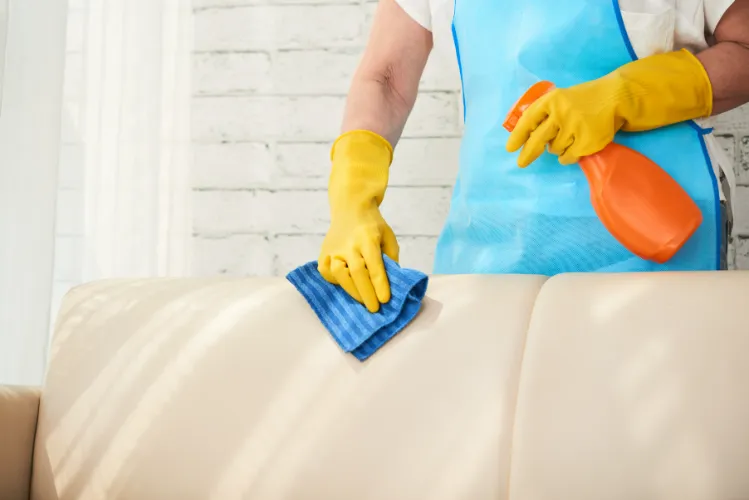
A clean couch wraps better and stays fresh. You should vacuum the cushions, seams, and frame to lift out dust and crumbs. Wipe down any spots, then let the sofa dry all the way through. Trapped moisture leads to mold and odor, which is a real risk in storage.
Step 4: Remove Cushions, Legs & Loose Parts

Your couch gets lighter and safer once you strip it down. You should pull off all loose cushions and throw pillows. Unscrew the legs if they detach, and separate any arms on a sectional. A labeled bag keeps screws and small parts together so nothing goes missing.
Step 5: Wrap Cushions & Pillows Separately

Cushions hold their shape best when packed on their own. You should wrap each cushion in plastic or slide it into a clean bag. Pillows belong in a separate box or bag to protect the fabric and maintain chair upholstery quality. This step also stops cushions from rubbing against the frame during the ride.
Step 6: Cover the Couch with Moving Blankets

Blankets are your sofa’s first layer of armor. You should drape them over the back, arms, seat, and base. Extra padding on the corners and edges matters most, since those spots take the hardest hits. Tuck the blankets so they fully cover the frame before the next step.
Step 7: Seal the Couch with Stretch Wrap

Stretch wrap locks the blankets in place and blocks dirt and water. You should wrap the sofa from top to bottom in tight, even layers. Light pressure is key, so the cushions never get crushed. Tape goes on the wrap itself, never on the couch fabric.
Step 8: Lift & Carry the Couch Safely

Your back will thank you for good lifting form. You should bend at the knees, not the waist, and keep the couch low and close to your body. Each helper lifts one end and calls out every move out loud. For tight corners, tilt the sofa on its end and pivot it slowly.
Step 9: Load the Couch into the Truck

The truck load decides how well your couch survives the trip. You should slide the sofa in with a dolly or hand truck, a helper on each side. Stand it on end or rest it flat against a wall to save space. Tie-down straps then hold it firmly so it cannot shift in transit.
Step 10: Unload, Place, or Store the Couch

The final step depends on where the couch is headed. You should unload it with the same care you used to load it. For a new home, carry the sofa to its spot before you peel off the wrap. For storage, leave the protective layers on and follow the storage tips in the next section.
How to Wrap a Sofa for Storage (Long-Term)
Long-term storage needs more care than a quick move. Here is how to wrap a sofa for storage so it stays clean, dry, and ready for months:
- Use a breathable cover, not sealed plastic. A cotton sheet or cloth furniture cover lets the sofa breathe and prevents mildew.
- Keep the couch off the floor. Wood pallets or blocks guard against floor moisture and pests.
- Pick a climate-controlled unit when you can. Steady temperature and humidity protect wood frames, leather, and foam.
- Leave space around the sofa. Air flow on all sides helps stop damp spots from forming.
- Store cushions flat and loose. Heavy items stacked on top cause dents that never fully bounce back, especially for premium outdoor cushions.
Couch Moving Tips for a Smooth Move
These couch moving tips help you dodge the most common mistakes:
- Wear closed-toe shoes and gloves for a safe, steady grip.
- Clear the room of pets, kids, and clutter before you lift.
- Never drag the couch, since dragging tears fabric and scratches floors.
- Lift around delicate legs and arms instead of sliding them across the ground.
- Furniture sliders make a heavy sofa glide across hard floors with ease.
- Snap a photo of your sectional before you take it apart, so reassembly is simple.
- Label every bag of hardware so nothing gets lost on moving day.
How to Wrap Different Types of Couches
Fabric, leather, and sectional sofa styles each need a slightly different method. Use the quick guide below:
| Couch Type | Best Wrapping Method |
| Fabric couch | Slip a clean sofa cover on first, then add blankets and stretch wrap over the top. |
| Leather couch | Use soft moving blankets only. Keep plastic off the leather, since it can trap condensation and stain. |
| Sectional sofa | Detach each section and wrap the pieces one by one for an easier carry. |
| Recliner or sleeper | Secure the moving parts and the fold-out mattress so nothing swings open in transit. |
DIY vs Professional Movers | Which Is Best?
You can move a couch yourself or hire help. Both paths work well, so pick the one that fits your budget and your time.
A DIY move saves money and suits light sofas and short distances. You will need helpers, a truck, and the supplies listed above.
Professional movers bring trucks, tools, and hands-on experience. They wrap, lift, and load couches fast, and many carry liability coverage for your furniture. For heavy sectionals, tight stairs, or long-term storage, pros lower your risk of injury and damage.
Proper vehicles and secure placement keep a couch safe in transit and in storage. The right call comes down to the weight of your sofa, the distance of your move, and how much help you can line up on the day.
Frequently Asked Questions
How do you move a couch by yourself?
You can move a couch alone with furniture sliders. A slider under each leg lets you push the sofa slowly across the floor. For stairs or long distances, bring at least one helper, since lifting a couch solo can cause injury.
Should you wrap a couch in plastic for moving?
Yes, stretch wrap is the right choice for a move. The plastic holds the blankets in place and blocks dust and moisture. For storage longer than a few weeks, a breathable cover works better, so the sofa never traps dampness.
How do you wrap a sofa for storage?
You should clean and dry the sofa first, then cover it with a breathable cloth. Pallets keep it off the floor, and a climate-controlled unit holds steady temperature and humidity. Sealed plastic is best avoided, since it can cause mold over time.
Can you store a leather couch in plastic?
No, plastic is a poor fit for leather. Proper leather couch care helps prevent moisture damage.. It traps moisture and can crack or stain the surface. A soft moving blanket or a cloth cover that lets the leather breathe is the safer option.
How many people do you need to move a couch?
Most couches need two people. Larger sectionals or sleeper sofas often need three or four. More hands lower the risk of injury and make tight corners far easier.
How do you move a couch through a narrow doorway?
You tilt the couch on one end and pivot it through the frame. Removing the legs first helps if they detach. One person guides from inside the room while another steers from outside.
How do you protect a couch when moving?
You clean the couch, pad it with moving blankets, and seal it with stretch wrap. Extra padding on the corners and careful lifting prevent most scratches, tears, and dents.
Final Thoughts
Moving a couch does not have to be stressful. With the right supplies, a clear path, and these 10 steps, you can wrap, lift, and load your sofa with confidence. The same care protects your couch in long-term storage, so it stays clean and ready for your next room.
Take your time with the measuring and wrapping, recruit enough help, and lift with good form. A little planning is all it takes to keep your couch in great shape, whether it is heading across town or into storage for months.